
The 79th Cannes Film Festival opened on May 12, 2026, with its footwear code intact: elegant leather shoes and sandals, no sneakers. Heidi Klum in René Caovilla, Demi Moore in matching Jacquemus heels, Maura Higgins in Andrew Kwon — the looks varied wildly, the standard for leather under those Palais lights did not. Every pair on the steps tonight is doing the same job: holding up under salt air, stone, and twelve days of scrutiny.
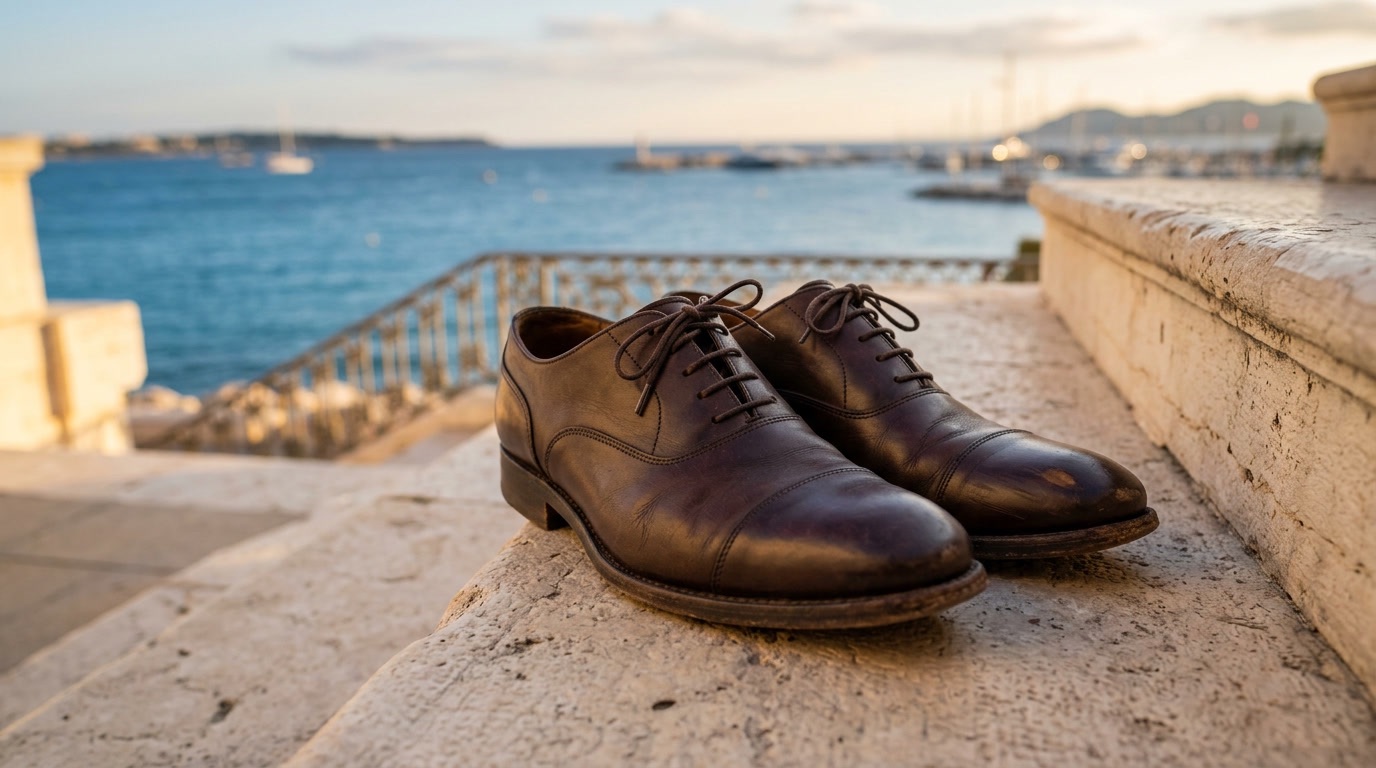
The Croisette is not kind to leather. The Mediterranean air carries salt. The Palais des Festivals steps are stone, uneven in places, and traffic from thousands of pairs of shoes over decades has worn them in ways that drag against a sole’s edge. The sun is relentless by afternoon. Every element that makes the Cannes red carpet cinematic is working against the shoes that walk it.
What the Cannes Environment Actually Does to Leather
Salt air is a slow deterioration agent. It pulls moisture from the leather as it evaporates — leaving behind mineral deposits that dry the fibres and dull the surface. A single evening of salt-air exposure is unlikely to cause visible damage. A week on the Croisette, in and out of climate-controlled venues, sun on the walk between, is a different matter.
The temperature swings compound it. Leather contracts in cool air-conditioned interiors and relaxes in warmth. Repeated cycling — hour by hour through a film festival’s schedule of screenings, parties, and press — creates micro-stress in the leather that accumulates into surface cracking if the leather is not well-conditioned going in.
Then there are the steps. The Palais des Festivals steps are stone with a particular abrasive quality at the edge, and a formal shoe’s toe is exactly at the height to catch them on the way up. The scuffs that come from stone contact are not the shallow surface compressions of a nightclub dance floor — they are material abrasions, where the finish has been removed rather than displaced.
The Care Window After a Formal Event
The period immediately after wearing matters more than most owners realise. Leather is still slightly warm from body heat and friction, and in that state the pores are more receptive — conditioner absorbs more effectively than it does after the leather has cooled and the surface has contracted.
The sequence is simple. While the shoes are still warm: a soft horsehair brush or damp cloth to remove surface dust and any visible deposits. Then conditioner, worked in with a clean cloth in circular motions. Allow it to absorb fully before storing. The following day, once the leather is settled, polish if the colour needs refreshing.
What to avoid: leaving the shoes in a bag or box immediately after wear, still damp from perspiration or humidity. Leather stored without airflow holds moisture against the lining and the interior seams — which is where deterioration tends to start in dress shoes, invisible until it is significant.
For any stone-step scuffs: leather cream in a matching colour, applied with a fingertip and buffed gently, can address surface compression. Deeper abrasions — where the finish is genuinely gone — require colour restoration, which is best done professionally. Attempting to fill a material abrasion with standard polish usually results in a visible patch rather than an invisible one.
What Fixano Would Do With These Shoes
A pair returning from a week at Cannes would come through a full condition assessment before any cleaning begins. The salt exposure means standard conditioning may not be enough — a deep moisture treatment, followed by a protective finish, is more appropriate. Any scuff work is done after restoration rather than before, so the colour base is correct before additional product is applied.
The shoes are then polished, sole-edge dressed, and returned in shoe bags with cedar inserts. The work takes longer than a standard clean, but the condition the shoes arrive back in is materially better than any process that treats events like Cannes as normal wear.
If your shoes came back from a formal trip looking different than when they left — the Fixano app connects you to leather restoration specialists across Los Angeles and Orange County. Share a photo, describe the wear, and find out what’s recoverable before doing anything else.