
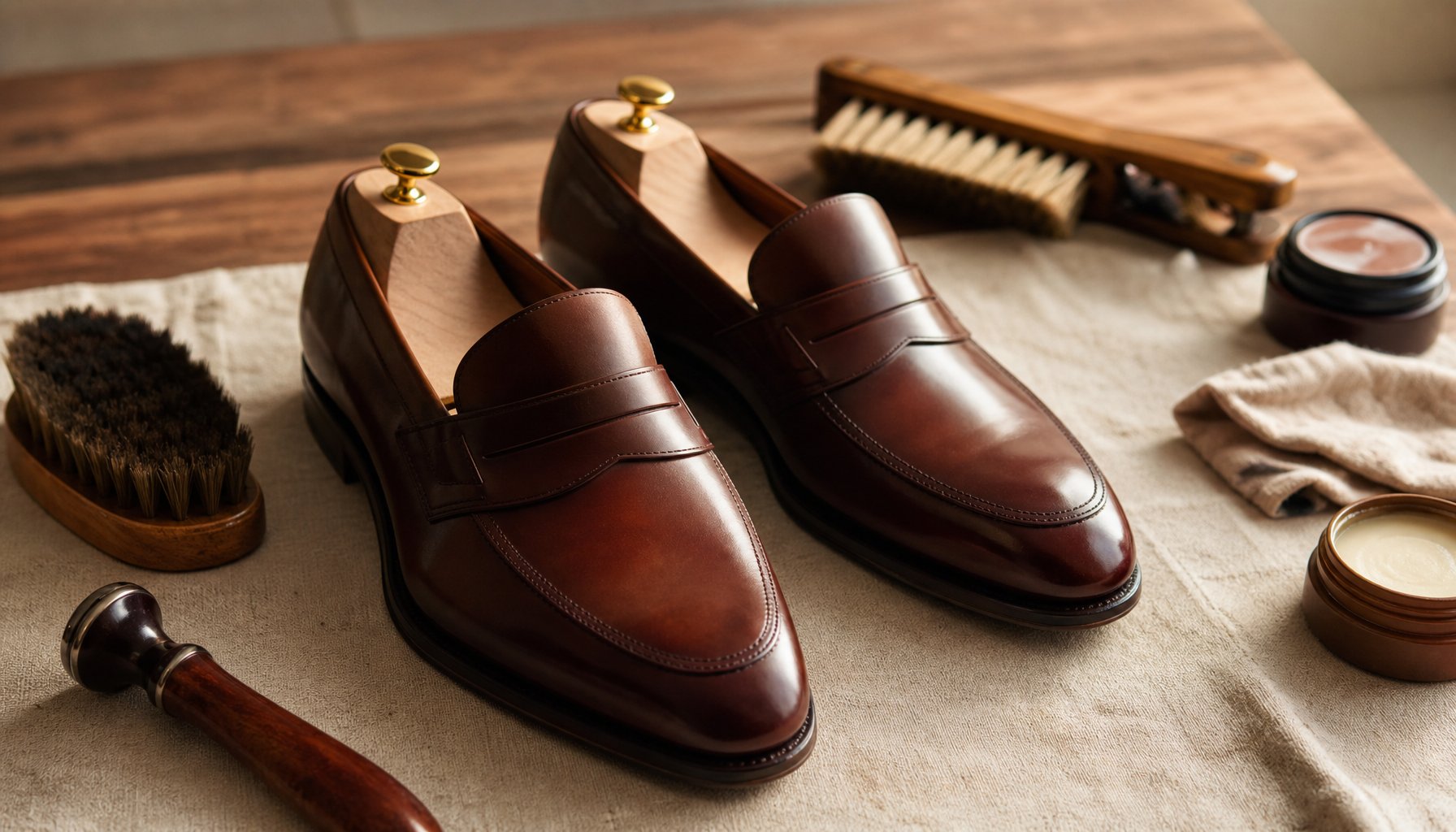
The loafer is a peculiar thing. It does not announce itself the way a brogue does, or demand attention like a patent oxford. It simply becomes the pair you reach for, again and again, until one morning you notice the vamp has softened into a shape that only your foot recognizes, and the leather has taken on the particular matte sheen of something well used.
This is not decline. This is character. But character still needs care.
What Dirt Does First
Surface dust is not innocent. It works into creases, abrades finish, and traps moisture against the leather. A soft brush, used gently and regularly, removes it before it becomes part of the shoe.
For suede, a dedicated suede brush lifts the nap without shredding it. For smooth leather, a barely damp cloth lifts grime that a dry brush will only push around.
Why Leather Dries Out
Leather is skin. It contains oils that keep it supple. Walking, heat, and dry air pull those oils out over time. The leather tightens. Small cracks appear at stress points — across the vamp, behind the heel — and once they open, they do not close on their own.
A quality conditioner, applied with a cotton cloth and worked in evenly, replaces what the shoe has lost. We use Chamberlain’s Leather Milk and Bickmore Bick 4 in the atelier. Both absorb cleanly and leave no greasy residue.
Apply sparingly. More is not better. Let the leather drink what it needs, then buff the excess with a dry cloth.
Polish, Not Armour
Cream polish, matched to the leather’s colour, restores depth without creating a plastic shine. Work it in with a horsehair brush, small circles, light pressure. The goal is not to bury the leather under a layer of wax. The goal is to feed it and protect it simultaneously.
Polish also creates a thin barrier against water and salt — useful in Los Angeles when the Santa Anas carry coastal moisture inland, or when an unexpected June shower catches you outside.
Water Happens
Leather and water are not enemies, but they are not friends either. A water-repellent treatment, applied to clean, dry leather and allowed to cure overnight, buys you time. It will not make the shoe waterproof. It will make a spilled coffee or a caught-in-the-rain moment survivable.
Reapply every six to eight weeks if you wear the pair regularly. Less if they live in a rotation.
The Shape They Take
Cedar shoe trees are not decorative. They absorb moisture from the day’s wear, hold the leather in its intended shape while it rests, and discourage the odour that develops when damp leather sits in a dark closet. Use them every time the shoes come off.
Store loafers in their original dust bag, or in a box that breathes. Plastic containers trap humidity and invite mildew.
When the Colour Has Left
A client brought us a pair of brown leather loafers she had worn to the office three days a week for seven years. The leather was not cracked, but it had faded to something resembling cardboard. The original depth was gone.
We cleaned the surface, conditioned the leather twice over two days to open the pores, then applied a colour-restoring dye in thin, even layers. The result was not new — it was better. A deep, living brown that carried the patina of those seven years without looking worn out.
She said they felt like the same shoes, only forgiven.
When to Bring Them to Us
Home care handles maintenance. It does not handle structural damage.
If the outsole has separated at the edges, if the heel is worn unevenly, if the leather has creased deeply enough to crack, or if the colour has faded past what polish can restore — that is the moment for an atelier.
We rebuild outsoles without changing the weight or silhouette of the shoe. We re-dye leather to match the original tone, not a generic approximation. We re-stitch where the thread has failed.
The goal is not to make the loafer look untouched. The goal is to make it look like it has lived well, and will live longer.
Service: Shoe Restoration
Locations: Pickup and delivery across Los Angeles and Orange County. Book through the app.