
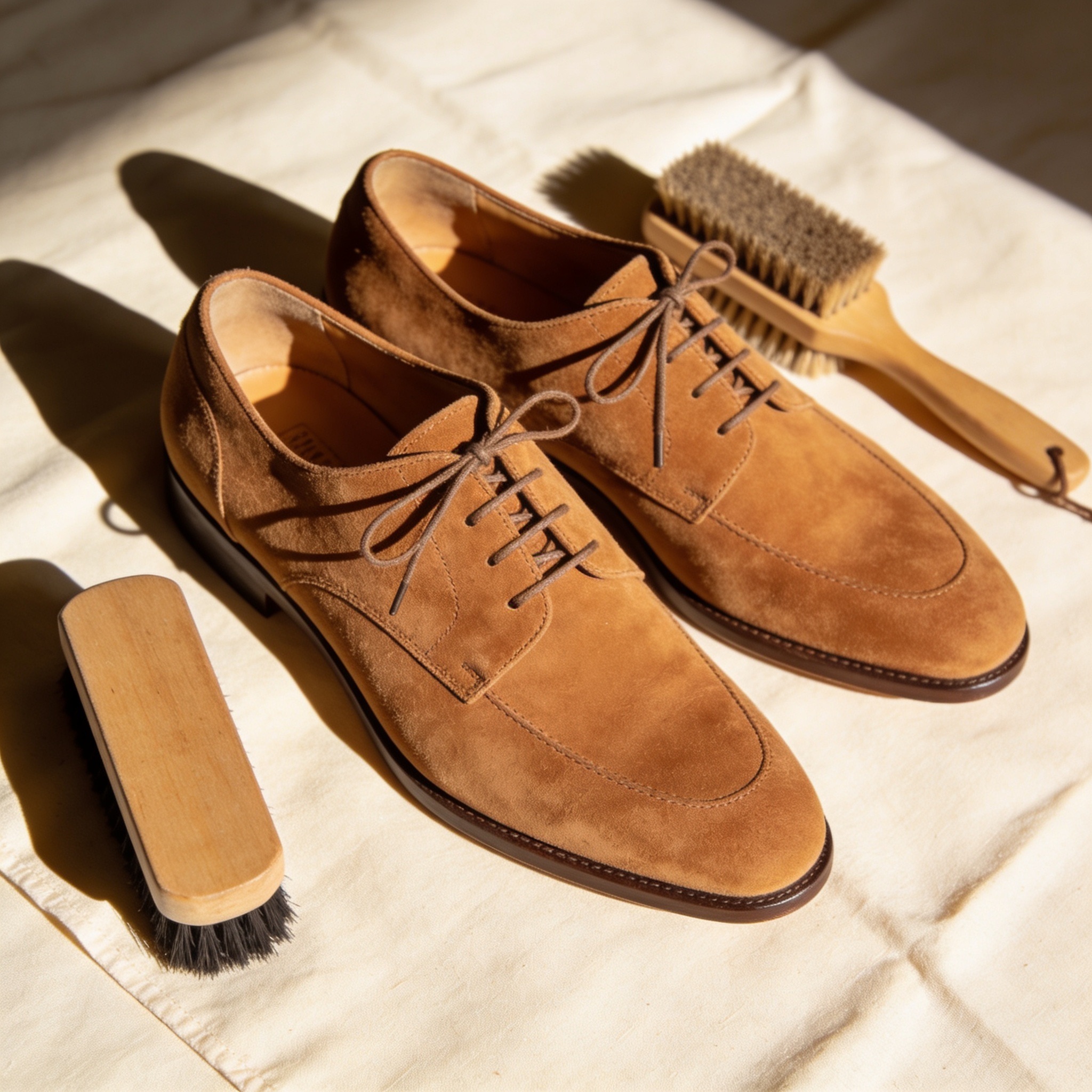
Nubuck has the texture of something that should not exist as a shoe material. Velvety, buffed to within an inch of its life from the top grain of the hide — it looks like it was designed to be photographed, not worn. It was designed to be worn. Cleaning it just requires understanding that the tools matter more than the product, and that the most common cleaning instinct — a damp cloth, a scrub — is the exact wrong one.
The two most common nubuck cleaning mistakes are using water when dry methods would have worked, and rubbing when the correct movement is brushing.
Nubuck vs Suede — Why the Difference Matters
Suede comes from the underside (split) of the hide. Its nap is softer and more irregular. Nubuck comes from the top grain, buffed to create a finer, more uniform texture. This is why nubuck has a slightly firmer hand and shows a more consistent colour in good light.
Both materials are sensitive to water, oils, and friction. Both require dry cleaning as the first method of choice. Both need a dedicated brush — not a cloth, not a sponge — as the primary cleaning tool. Nubuck shoes and nubuck leather are particularly susceptible to watermarks because the uniform surface makes any variation immediately visible.
One of Fixano’s more frequent intake types is nubuck shoes that arrived wet, dried badly, and then had someone attempt to clean them with a regular leather cleaner. The nap becomes flat, the colour uneven. The restoration process is longer than a preventative dry clean would have been.
What You Need to Clean Nubuck
Before starting, gather:
- Nubuck brush — with both rubber and brass bristle sections (sold as a combination brush). The rubber lifts dry dirt; the brass raises flattened nap.
- Nubuck cleaner — specifically formulated for nubuck and suede (Tarrago Nubuck Bar, Saphir Omnidaim, or similar). Not smooth leather cleaner.
- A clean, dry microfibre cloth — for blotting only, never rubbing
- Nubuck protector spray — applied after cleaning, waterproofs the nap and reduces future staining
What to avoid: water, foam leather cleaners, saddle soap, silicone sprays, and any conditioner designed for smooth leather. All of these flatten the nap or introduce too much moisture for the material to handle safely.
Step-by-Step: How to Clean Nubuck Shoes
Step 1 — Dry brush first. Use the rubber side of your nubuck brush to loosen dry surface dirt. Brush gently in one direction to lift the dirt without compressing the nap further. Work across the entire shoe before targeting any specific marks.
Step 2 — Target scuffs and marks. The brass wire side of the brush can loosen more stubborn scuffs. Use short, light strokes, always in the direction of the nap. For shiny or compressed marks (where the nap has been flattened), the brass bristles help raise the texture back.
Step 3 — Apply nubuck cleaner to persistent stains. Rub the Nubuck Bar or apply the spray cleaner lightly to the affected area. Work in small circular motions with a soft brush, then brush back in one direction. Let the area dry fully before assessing the result.
Step 4 — Allow to dry naturally. Never apply heat. Stuffing the shoes lightly with clean paper helps them hold shape and absorbs moisture gently.
Step 5 — Brush the nap back. Once fully dry, brush the entire surface again in one direction to restore a uniform nap texture.
Step 6 — Apply protector spray. A nubuck protector spray seals the surface against future moisture and light staining. Hold the can 20–30cm from the surface and apply two light coats, allowing each to dry before the next.
How to Clean Nubuck Sneakers
The process for how to clean nubuck sneakers follows the same logic, with one addition: sneakers collect more concentrated dirt around the midsole edge and toe box, and the sole itself often carries grit that can scratch the upper if dragged across it.
Before brushing, remove loose dirt from the sole edge with a clean toothbrush or dry cloth. Tape the midsole if you are using any wet product near it — water running down from the upper onto a white midsole creates tidelines. Clean the upper as described above, keeping any moisture away from stitching where possible, as water drawn into stitched seams can cause thread to swell and later split.
Cleaning Nubuck Leather — Bags and Accessories
How to clean nubuck leather on bags and accessories follows the same dry-first approach, with more caution around any hardware. Nubuck bags are less common than nubuck shoes but the same sensitivity to moisture and friction applies.
For bags, the challenge is often that the nap near handles and corners has been compressed through regular use — the leather looks darker and almost shiny in those areas. A brass nubuck brush used in short strokes can restore some of this texture, but heavily compressed areas may need professional attention to return fully.
When Nubuck Gets Wet
Water is the most common way nubuck gets damaged, and not always dramatically. A light rain shower, a splash from a car puddle, a drink knocked over. Nubuck that gets wet should be allowed to dry away from heat at room temperature. Stuffed lightly with clean paper, kept away from direct sun and radiators.
Once dry, the nap will likely be flattened and possibly uneven in colour. A brass nubuck brush — used gently, in one direction — restores much of the texture. If watermarks remain as distinct rings, a light application of nubuck cleaner across the whole surface (not just the watermark) followed by brushing helps blend the tone.
Do not apply conditioner, oils, or wax-based products to wet or recently wet nubuck. These products are for smooth leather and will not help — they will darken the nap and may become irreversible.
How Often to Clean Nubuck
For regular-wear nubuck shoes, a dry brush after every few wears and a full clean every 4–6 weeks is a reasonable maintenance routine. Applying a protector spray every 3–4 months extends the time between deep cleans significantly. Nubuck stored without cleaning accumulates surface oils that become harder to lift over time — the quarterly clean is easier than the annual restoration.
What Fixano Restores
For nubuck that has been compressed, watermarked, or cleaned incorrectly, the Fixano sneaker and shoe restoration service includes nap restoration, even colour correction, and protective finishing. Most nubuck restoration work is completed within 3–5 days. Similar suede-specific guidance is scheduled for the journal, but the safest immediate move for damaged nap is professional assessment before brushing or wet cleaning.
When the nap won’t lift and the DIY options are exhausted, the Fixano app connects you with restoration specialists in Los Angeles and Orange County. Photograph the shoes or bag, describe the damage, and get a clear picture of what’s recoverable — before the condition worsens further.