
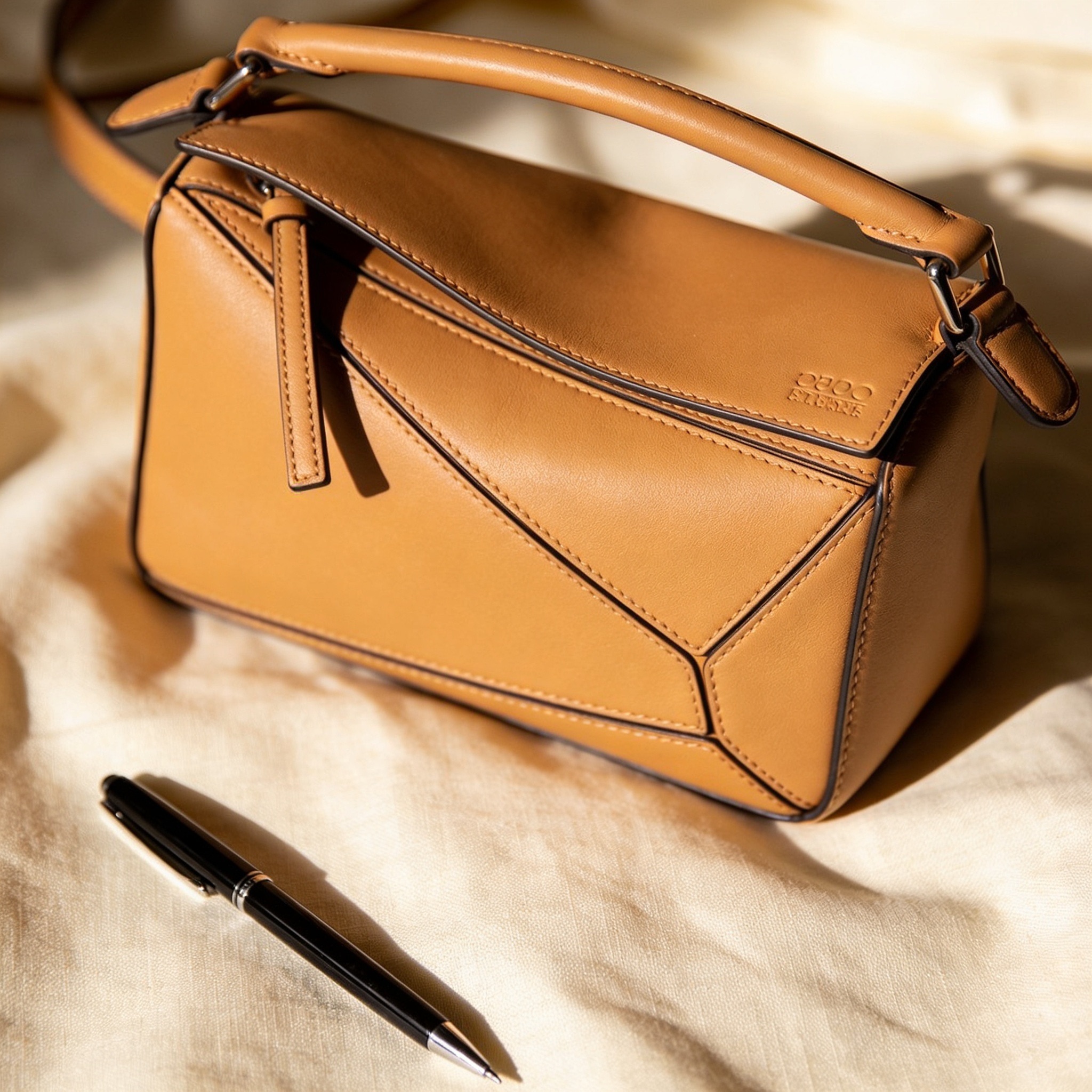
A pen stain on a leather bag is the kind of damage that happens in a meeting. The pen was fine. The bag was nearby. The combination was inevitable. Ink bonds with leather differently than with fabric — it penetrates the surface rather than sitting on top — which means the standard instinct of scrubbing hard will spread the damage rather than lift it. Most ink stains are recoverable. The difference between a recovered bag and a ruined one is usually what happened in the first ten minutes.
Most ink stains on leather are recoverable if handled correctly. A few are not. The difference usually comes down to how long the stain has been there, what finish the leather has, and what the owner tried first.
Why Ink Behaves Differently on Leather
Leather is porous. That’s what makes it beautiful and durable — it breathes, it ages, it develops a patina that synthetic materials cannot replicate. It’s also why a pen mark doesn’t sit politely on the surface waiting to be wiped away. The ink finds the microscopic channels in the leather and travels into them. On unfinished or aniline leather, it goes deeper. On finished, coated leather, it has a protective layer to fight through first.
The finish matters enormously here. Smooth, coated leather — the kind on most structured handbags from Louis Vuitton, Gucci, or Prada — has a surface treatment that slows ink penetration and gives you more time to act. Aniline or unfinished leather absorbs ink almost immediately. Suede and nubuck should go directly to a professional — there is no safe home treatment for ink on nap-finish leather.
What to Gather Before You Start
Speed matters with fresh ink. Before touching the stain, gather what you need:
- Dedicated leather ink remover (the safest first step — brands like Leather Honey or Chamberlain’s Leather Milk make specific ink formulas)
- Isopropyl alcohol at 70% (a backup for fresh stains on smooth coated leather — use sparingly)
- Cotton swabs — not cotton balls, which spread the stain
- A clean, dry microfibre cloth
- Leather conditioner — used after any treatment, without exception
What you do not need: nail polish remover, hairspray, hand sanitizer as a first resort, or any multipurpose household cleaner. These either strip the leather’s finish or spread the stain and create a larger problem than the one you started with.
How to Remove Fresh Ink Stains from a Leather Bag
Fresh ink — anything within the last few hours — gives you the best chance of full removal.
-
Blot, never rub. Use a dry cotton swab to lift as much ink as possible from the surface. Work from the outer edge of the stain inward. Rubbing spreads the pigment laterally and pushes it deeper.
-
Apply leather ink remover sparingly. Dampen a new cotton swab with your chosen ink remover. Dab at the centre of the stain and work outward in small circles. You are lifting, not erasing. Change swabs frequently so you are not depositing ink back onto the leather.
-
Allow the area to dry. Assess the result. If the stain has lifted significantly, continue with a second application. If it has faded but not gone, you may need to accept partial removal or move to a professional.
-
Condition the leather. Any cleaning agent — even gentle ones — removes some natural oils from the leather. A leather conditioner applied after treatment prevents drying and cracking. Work it in with a clean cloth and allow it to absorb fully.
The Fixano workshop sees a pattern here: customers who attempt a home treatment, achieve a partial lift, then attempt the same method three more times. By the third attempt, the leather is dry, the ink has spread, and the finish has begun to peel. One careful attempt is better than four aggressive ones.
How to Remove Dried Ink Stains from Leather Bags
Dried ink is a harder problem. The ink has had time to bond with the leather fibres, and the same methods that lift fresh stains may only partially work.
Start with the same process as above — a dedicated ink remover, dab gently, assess. For stains that have been on the leather more than 24 hours, isopropyl alcohol at 70% on a cotton swab can be more effective than most commercial cleaners. Apply with the same discipline: dab from the edge inward, change swabs constantly, work slowly.
If the stain has been sitting for days or weeks, you are likely looking at residual discolouration rather than true removal. The ink is no longer on the surface — it is in the leather. At this point, professional restoration — which involves colour matching, refinishing, and in some cases light sanding of the affected area — becomes the more reliable path.
Light Leather vs Dark Leather — Different Risks
On dark leather, ink stains are often nearly invisible until they catch the light at an angle. On light or nude leather, an ink stain is immediately obvious and the risk of treatment is higher: any aggressive product can bleach the surrounding area, creating a pale patch that is more visible than the original stain.
For light, cream, or white leather, the recommendation is clear. A single careful attempt with a leather-specific ink remover is acceptable. If the stain does not lift on the first application, take the bag to a professional. Attempting to remove ink from light leather with alcohol or acetone products risks permanent discolouration — and the cost of professional colour restoration on a pale bag is significantly higher than a single professional ink-removal session.
What Not to Use
Some home remedies appear frequently online but cause more damage than they prevent:
Nail polish remover / acetone — effective at removing ink from nails, effective at stripping leather dye, finish, and natural oils. Do not use it.
Hairspray — once contained enough alcohol to work on ink stains. Modern formulas are different, and the resins and polymers in hairspray can leave a sticky residue that attracts more dirt.
Hand sanitizer — the alcohol content can lift fresh ink from coated leather in a controlled application. But gel sanitizers contain humectants that leave residue, and repeated use dries leather visibly. It is a last resort, not a first step.
Baby wipes — gentle enough that they are unlikely to lift ink. Not gentle enough that they cannot streak a delicate leather finish.
When to Take It to a Professional
Some scenarios genuinely require professional attention, and recognising them early saves the bag:
- The ink is on aniline, suede, or nubuck leather — no safe home treatment exists
- The bag is vintage or heirloom quality — the risk of a home attempt is higher than the cost of professional work
- The stain has been there more than a week
- You have already attempted home treatment and spread the stain or lightened the surrounding leather
- The bag is light-coloured and the stain is significant
What Fixano Restores
Ink stain removal is one of the more common requests in the Fixano leather bag restoration service. The work involves colour-matched refinishing where the stain cannot be fully lifted — returning the leather to an even tone without the patchwork effect of amateur attempts. Bags treated through the app arrive back within 2–3 days for cleaning work and around 7 days for full surface restoration.
If the stain has had time to set, or if the leather is too precious to risk, the Fixano app connects you with restoration specialists across Los Angeles and Orange County. Photograph the damage, describe what happened, and get a clear answer on what’s recoverable — before attempting anything further.