
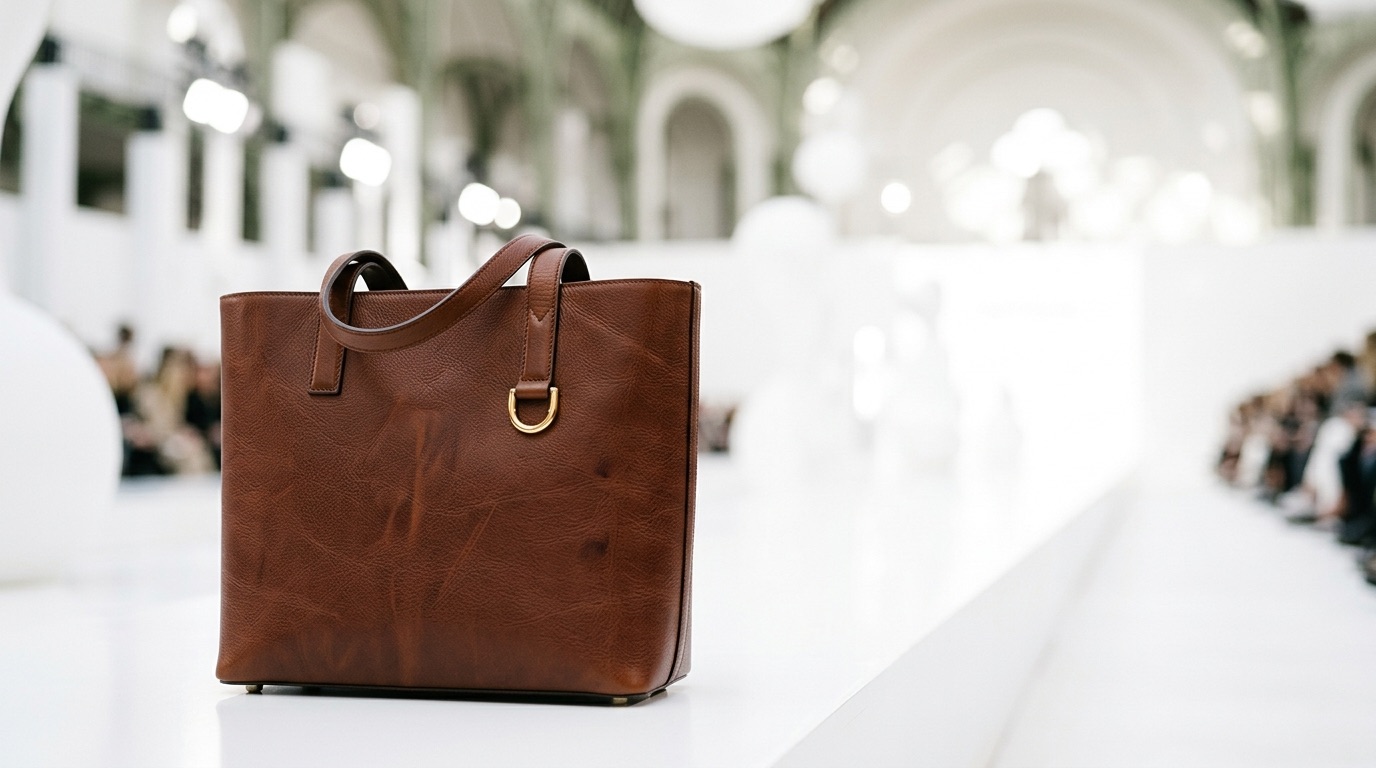
The Fall/Winter 2026 menswear shows in January established leather as the baseline, not a trend. Structured jackets at Louis Vuitton, oversized totes at Loewe, burnished boots across half a dozen runways — leather anchored nearly every collection. As the Spring/Summer 2027 shows approach, the question shifts from what is being shown to what happens to those pieces after the lights come down. A runway leather piece seen once is pristine. The same piece carried for a season tells a different story.
Paris Men’s Fashion Week is where leather is taken most seriously. The houses that show here are the ones that have been working with full-grain calf leather, hand-cut and stitched, for longer than most current trends have existed. The pieces on the runway are not fashion objects — they are arguments about what the material can do, and what it becomes over time.
What the Runway Materials Actually Are
The leather on the Paris Men’s runway divides cleanly into two categories: vegetable-tanned and chrome-tanned. The distinction is not marketing language — it is a functional difference that determines how the piece behaves over its life.
Vegetable-tanned leather is processed using plant-derived tannins: oak bark, chestnut, mimosa. The process is slow — weeks to months — and the result is a dense, firm leather that begins relatively stiff and softens gradually with use. It absorbs conditioning oil and develops a patina that is specific to how and where the piece has been carried. A vegetable-tanned bag carried for ten years in Los Angeles looks different from the same bag carried in Paris. That is not a flaw — it is the leather recording its history.
Chrome-tanned leather is processed using chromium salts in a process that takes hours rather than weeks. The result is a softer, more uniform leather that does not develop as pronounced a patina. Most production-volume leather goods — including high-price-point ones — use chrome tanning. Both are legitimate materials. Understanding which you have changes how you care for it.
What Paris Fashion Week Reveals About Longevity
The houses that show in Paris at the men’s week — Hermès, Louis Vuitton, Dior, Loewe — are, among other things, making an argument about time. The pieces shown are designed to be used for decades, handed down, and restored. The construction involves techniques that allow individual components to be replaced: stitching that can be re-done without compromising the structure, hardware that can be removed and re-fitted, linings that can be replaced without damaging the exterior.
This matters because it changes the way you should think about wear. A mark on a piece made to last thirty years is not damage — it is use. The question is not how to prevent the leather from showing its history, but how to manage that history so the piece continues to function and look considered rather than neglected.
Surface scuffs on full-grain leather can be addressed with leather cream. Water marks, if treated while still damp, can usually be evened out. Corner wear — the first and most consistent point of structural damage on a structured bag — can be rebuilt. None of this requires throwing the piece away.
What Fixano Would Do With a Runway Piece
A bag from a Paris men’s house that has been carried for two to three years typically arrives with: corner wear, handle darkening from hand oils, and some surface soiling on the bottom. The restoration sequence is assessed piece by piece — the materials and construction methods vary enough between houses that a standard approach would be wrong.
What does not vary: the work starts with an assessment of the leather type and what it can receive. Conditioning the wrong leather with the wrong product damages rather than restores. Fixano’s work on luxury leather goods begins with identification, then treatment.
A piece from a Paris house deserves considered restoration, not a shelf of generic leather care products. The Fixano app connects you to leather restoration specialists in Los Angeles and Orange County — share a photo, describe the history, and find out what’s possible.