
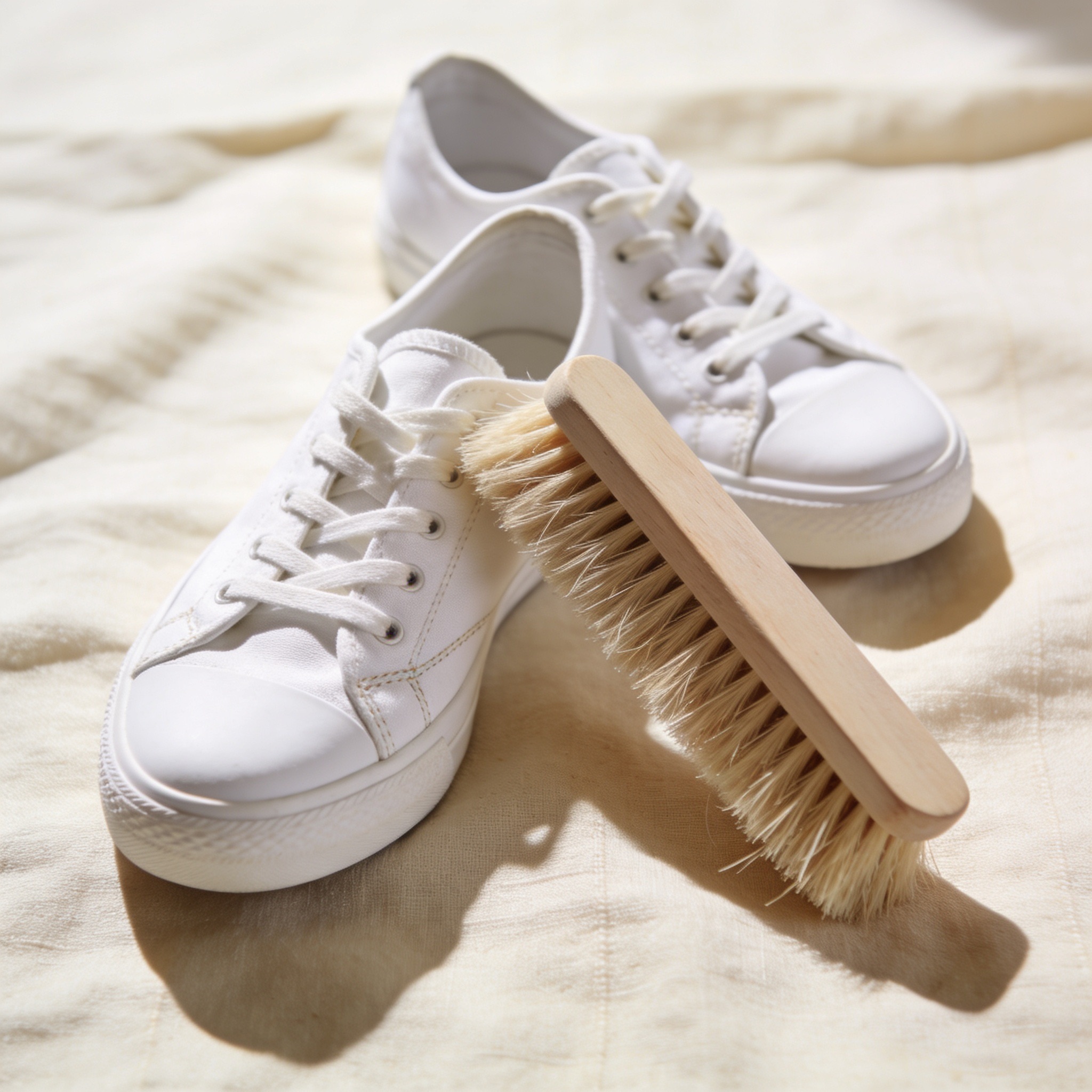
Canvas shoes are the optimists of the footwear world. They get dirty fast, they clean up reasonably well, and they go back into rotation with a confidence that belies how they looked twenty minutes ago. The cleaning process is genuinely straightforward — the mistakes people make are also genuinely consistent, and they usually involve hot water, bleach, or a tumble dryer. Avoid those three and most canvas shoes clean well.
The most common mistake is treating canvas like a durable fabric that can take whatever cleaning method is to hand. It is durable, but the construction around it — glued soles, reinforced toe caps, printed details — is less forgiving than the canvas itself.
What Canvas Actually Is
Canvas is a woven cotton fabric — dense, flat-woven, and traditionally used in sailmaking before it became one of the dominant materials in casual footwear. The density of the weave is why canvas holds its shape and why it also holds dirt so effectively. Particles settle into the weave rather than sitting on top of it.
The canvas on a sneaker or canvas shoe is usually treated with a stiffening agent and bonded to a rubber sole through adhesive. This means that moisture — particularly hot water and extended soaking — attacks the adhesive bond and can separate the sole from the upper over time. Cleaning canvas shoes should involve the minimum moisture necessary to do the job.
What You Need to Clean Canvas Shoes
- Soft-bristle brush — a nail brush, a soft-bristle shoe brush, or an old toothbrush for tighter areas
- Sneaker cleaner or mild washing-up liquid — diluted in cool water
- Baking soda — for white canvas stains and as an alternative paste cleaner
- White vinegar — helps neutralise soap residue that causes yellowing
- Clean cloths or paper towels for rinsing
- Shoe trees or crumpled paper to stuff the shoes while drying
What to avoid: bleach (weakens fibres and causes uneven whitening), hot water (loosens adhesive), stiff wire brushes (damage the weave), and the tumble dryer (distorts shape and accelerates glue failure).
How to Clean Canvas Shoes Step by Step
Step 1 — Remove laces and insoles. Laces can be soaked separately in warm soapy water and hand-washed easily. Insoles dry slowly inside shoes and cause the interior to smell if left damp for too long.
Step 2 — Dry brush first. Before applying any water, use a dry soft-bristle brush to remove loose surface dirt. Brushing dried mud and grit before wetting it prevents turning dry particles into a muddy paste that works deeper into the weave.
Step 3 — Mix your cleaning solution. A small amount of mild washing-up liquid in cool water. Or, for white canvas, a baking soda paste: one tablespoon of baking soda, one tablespoon of white vinegar, a splash of water — mixed until it forms a gentle foam. Apply the paste to a brush, not directly to the canvas.
Step 4 — Clean in circular motions. Work section by section, applying the cleaner with the brush in small circles. The bristles get into the weave more effectively than a cloth. Focus on the toe box and any visible marks first. Rinse the brush frequently.
Step 5 — Rinse thoroughly. Use a clean damp cloth, wrung out well, to remove soap residue from the canvas. Soap left in the fabric is the primary cause of yellowing on white canvas — it turns yellow with UV exposure while wet. Rinse more than you think is necessary.
Step 6 — Stuff and dry naturally. Lightly stuffed with clean paper, in a dry room away from direct sunlight. Air drying white canvas near a window while still damp is a reliable way to yellow it. Indoors, away from UV, allows the canvas to dry slowly and evenly.
Baking Soda for Cleaning Canvas Shoes
The baking soda method for canvas shoes gets frequent online attention because it works reasonably well and uses materials most households have. The chemical reaction between baking soda (alkaline) and white vinegar (acid) creates a brief foam that helps lift surface oils and grime.
For white canvas, the method also has a mild whitening effect — baking soda is a gentle abrasive and the vinegar helps cut through the yellowing compounds that accumulate in white fabric over time.
Apply the paste with a toothbrush, work it into the canvas in small sections, let it sit for 5–10 minutes, then rinse thoroughly with a clean damp cloth. The rinse step is not optional — baking soda residue left in the weave causes stiffness and, ironically, can contribute to the yellowing it was meant to fix.
Cleaning White Canvas Sneakers — The Yellowing Problem
White canvas sneakers are the category where cleaning goes wrong most frequently. The yellowing that appears after cleaning is usually one of three things:
- Soap residue oxidising with UV light — rinse more thoroughly and dry indoors
- Bleach damage — bleach whitens unevenly and weakens cotton fibres over time, leaving grey or yellow patches
- Age oxidation — the cotton fibres themselves yellowing, usually in older pairs or canvas that has been wet repeatedly
For existing yellowing on white canvas, a diluted hydrogen peroxide solution (3% pharmacy-grade, diluted 50/50 with water) applied carefully to the yellowed areas and dried outdoors in indirect light (not direct sun) can lift the tone. This is a careful, one-pass method — not a repeat treatment.
How to Clean Canvas Sneakers with Coloured Canvas
Coloured canvas — navy, black, red, khaki — requires the same core approach without any products that have whitening properties. No baking soda, no hydrogen peroxide, no whitening sneaker cleaners.
A mild sneaker cleaner (Jason Markk, Sneaker Lab) diluted in cool water and applied with a soft brush is the safest approach for coloured canvas. Work in small sections, rinse with a clean damp cloth, and dry away from direct light. Colour transfer is possible with coloured canvas if the dye is not well-fixed — test any cleaning product on an inconspicuous area first.
The Sole and Midsole
The rubber sole and midsole of canvas shoes clean up well with a slightly stiffer brush and a targeted solution. White toothpaste applied to the rubber sole with an old toothbrush removes scuffs and oxidation effectively — the mild abrasive in the toothpaste works on rubber in the same way it works on tooth enamel.
For yellowed white midsoles on canvas sneakers, the same hydrogen peroxide method that works on the canvas upper works on rubber — applied carefully, dried in indirect light. The how to remove scuff marks from shoes guide has additional detail on sole maintenance.
What Fixano Restores
Canvas shoes that have been cleaned incorrectly — yellowed, sole-separated, or with stubborn staining that home methods haven’t shifted — are candidates for professional sneaker restoration. Deep cleaning, sole regluing, and whitening work on canvas is part of the service. Most canvas cleaning and light restoration work completes in 2–3 days.
When the baking soda and the sneaker cleaner have both had their chance and the canvas still looks wrong, the Fixano app connects you with restoration specialists in Los Angeles and Orange County. Photograph the shoes and describe what you’re working with — the assessment is free.